
Prime Minister Links Austerity to Market Dips
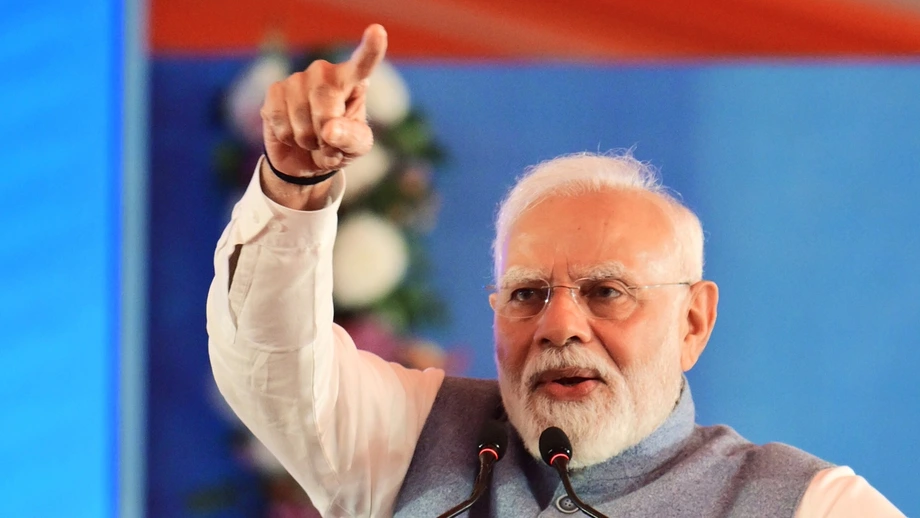
Prime Minister Narendra Modi stated on Saturday that Indian citizens successfully saved money by heeding his earlier appeal to avoid purchasing gold unless strictly necessary. Speaking on November 21, 2026, at the fifth National Skill Convocation Ceremony held at the Indira Gandhi Pratishthan in Lucknow's Gomti Nagar, the prime minister recalled his public request made in May. During that rally in Hyderabad, he had urged the nation to halt non-essential gold purchases to protect foreign exchange reserves under pressure from Middle East conflicts and surging crude oil prices. Uttar Pradesh Chief Minister Yogi Adityanath and Union Skill Development Minister Jayant Chaudhary were present at the event, where 52 national-level toppers from Industrial Training Institutes and other skill training institutions were honored.
목차
Addressing the gathering in Vibhuti Khand, Prime Minister Narendra Modi recounted the public response to his economic appeal and the subsequent financial outcome. He stated that the restraint exercised by ordinary citizens directly contributed to a drop in domestic gold prices, allowing people to retain their savings.
I had urged the countrymen that for one year, if it is not necessary, please do not buy gold. An ordinary person like me asked to buy less gold, and the countrymen bought less gold, and gold prices fell. Today, people are telling me, Modi ji, you spoke, we listened to your advice, and our money was saved.
Gold prices in Delhi stood at ₹12,523 per gram on May 9, the day before the initial appeal, before declining over subsequent months. By November 21, 2026, rates according to Goodreturns were ₹12,508 per gram for 24-karat gold, ₹11,465 per gram for 22-karat gold, and ₹9,381 per gram for 18-karat gold. In Mumbai, the price of 22-karat gold was ₹11,2099 per 10 grams on Saturday, while Delhi recorded ₹11,1907 per 10 grams. Globally, Bloomberg reported that bullion traded near $3,500 an ounce on Friday, marking a weekly loss of nearly 9 percent following five consecutive days of decline.
Drawing Parallels With Historical Precedents
Prime Minister Narendra Modi compared his recent appeal to the historic call made by former Prime Minister Lal Bahadur Shastri during a severe food shortage in 1965. In 1965, India faced a wheat shortage after then United States President Lyndon B Johnson delayed supply shipments, prompting Lal Bahadur Shastri to ask citizens to voluntarily skip one meal a week, an appeal that received widespread compliance.
Invoking that national spirit during his address in Lucknow, the prime minister emphasized that the character of the country remains unchanged across generations. He noted that just as citizens responded to past crises through voluntary restraint, contemporary society has demonstrated a similar willingness to support national economic measures.
I am happy, just as Lal Bahadur Shastri ji had asked the countrymen to skip one meal, and this country obeyed his call; my country still holds that same character.
The event also featured remarks by Uttar Pradesh Chief Minister Yogi Adityanath, who noted that over 17 million youth have been trained under the Uttar Pradesh Skill Development Mission, with more than 700,000 securing jobs through campus selection. Alongside economic austerity, the prime minister focused heavily on vocational training, stating that practical skills will hold greater value than formal academic certificates in the future job market. He announced that India will host the 2027 WorldSkills Competition in Noida, highlighting the growing international demand for skilled Indian workers.
Foreign Exchange Pressures and Import Duty Hikes
The appeal to curb gold purchases formed part of a broader set of austerity measures introduced in May to manage India's current account deficit. The current account deficit measures the difference between the total value of goods and services a country exports and the goods and services it imports, alongside net earnings from abroad. When a nation imports significantly more than it exports, the deficit widens, requiring foreign exchange reserves to bridge the gap.
Data compiled by Trading Economics indicates that India's foreign exchange reserves stood around $690.69 billion, having previously reached a record high of $728.49 billion in February before global uncertainties triggered central bank interventions. Meanwhile, the International Monetary Fund projected that India's current account deficit could widen to $84.5 billion in 2026, accounting for roughly 2 percent of gross domestic product. Gold imports historically constitute a major portion of the import bill, reaching $71.98 billion in the 2025-26 fiscal year after totals of $58 billion in 2024-25, $45.54 billion in 2023-24, and $35 billion in 2022-23.
To stem this outflow of foreign exchange, the government raised the import duty on gold and silver from 6 percent to 15 percent effective May 13. Official figures indicated that gold imports dropped by approximately 70 percent to between 25 and 30 tonnes in the month following the duty hike, down from 75 to 100 tonnes previously. Government trade data further showed that official gold imports fell nearly 40 percent during the April to October period, totaling $24.78 billion compared to $41.24 billion during the corresponding period of the previous year. World Gold Council figures for the July to September quarter showed overall gold demand falling 29 percent year-on-year to 162 tonnes, with jewellery demand decreasing 20 percent to about 100 tonnes.
Impact on Stock Markets and Sectoral Reactions
The prime minister's appeal and the subsequent customs duty increase generated immediate reactions across domestic equity markets, particularly affecting retail jewellery shares and related consumer sectors. Stocks of major jewellery retailers experienced sharp intraday declines following the announcement of the austerity measures and import tax revisions.
Titan Company shares declined as much as 6.4 percent, Kalyan Jewellers India shares dropped 8.3 percent, Sky Gold stock plunged 12.2 percent, Senco Gold shares tanked 10.7 percent, PN Gadgil Jewellers slipped 7 percent, PC Jeweller fell 5 percent, and Tribhovandas Bhimji Zaveri cracked 6.3 percent. Market analysts observed that the policy directives also created cautious sentiment across travel, hospitality, and petroleum-linked industries, as consumers were urged to postpone non-essential foreign travel, destination weddings, and reduce fuel consumption.
Financial experts noted that domestic demand remains only one variable influencing precious metal valuations. Commodities analysts pointed out that international bullion prices are heavily driven by global macroeconomic factors, including Federal Reserve interest rate expectations, US bond yields, and currency movements. Commenting on broader market indicators, macroeconomic analyst Luke Gromen described public claims of credit for price movements as potential contra indicators, while noting that historical metrics such as the Buffett metric adjusted for federal debt have often signaled periods of equity underperformance relative to gold.
Alternative Investment Avenues and Future Outlook
Financial planners have suggested shifting household savings from physical gold jewellery and bullion toward digital or financial instruments to prevent foreign exchange outflows while maintaining capital growth. Suggestions from mutual fund distributors include utilizing systematic investment plans and investing in gold exchange-traded funds to track market prices without requiring physical imports.
Prime Minister Narendra Modi also referenced his previous economic advice delivered in Parliament in 2023, where he encouraged citizens to invest in bonds issued by public sector undertakings. He claimed that investors who followed that guidance achieved positive financial returns, linking prudent household financial decisions to the broader framework of national economic development alongside vocational skill enhancement.
Looking ahead, market participants continue to monitor global geopolitical developments in the Middle East and energy supply stability through critical maritime trade routes. While near-term headwinds such as elevated interest rates and persistent inflation concerns influence precious metal trajectories, analysts emphasize that long-term domestic affinity for gold as a traditional store of value remains structurally intact.
The Essentials
- Prime Minister Narendra Modi credited public restraint for falling gold prices during his address at the 5th National Skill Convocation Ceremony in Lucknow on November 21, 2026.
- The prime minister compared the gold-buying curb to former Prime Minister Lal Bahadur Shastri's 1965 appeal to skip a meal during a food shortage.
- Gold rates in Delhi stood at ₹12,508 per gram for 24-karat gold on November 21, 2026, according to Goodreturns, alongside global bullion trading near $3,500 an ounce.
- The government raised import duties on gold and silver from 6 percent to 15 percent on May 13 to preserve foreign exchange reserves amid West Asian conflicts.
- Official data showed gold imports dropped about 70 percent to 25-30 tonnes in the month following the duty hike, while April-October imports fell to $24.78 billion.
- Jewellery stocks including Titan, Kalyan Jewellers, and Senco Gold experienced intraday declines of up to 12 percent following the austerity announcements.